
Messages
Send audio
Send an audio to a contact or group on WhatsApp
POST
Send audio
Overview
Method responsible for sending audios to your chats. You can work with audios in 2 ways:- By Link: if you have the audio hosted somewhere on the internet, just send the link;
- By Base64: if you want to send the audio in Base64 format.
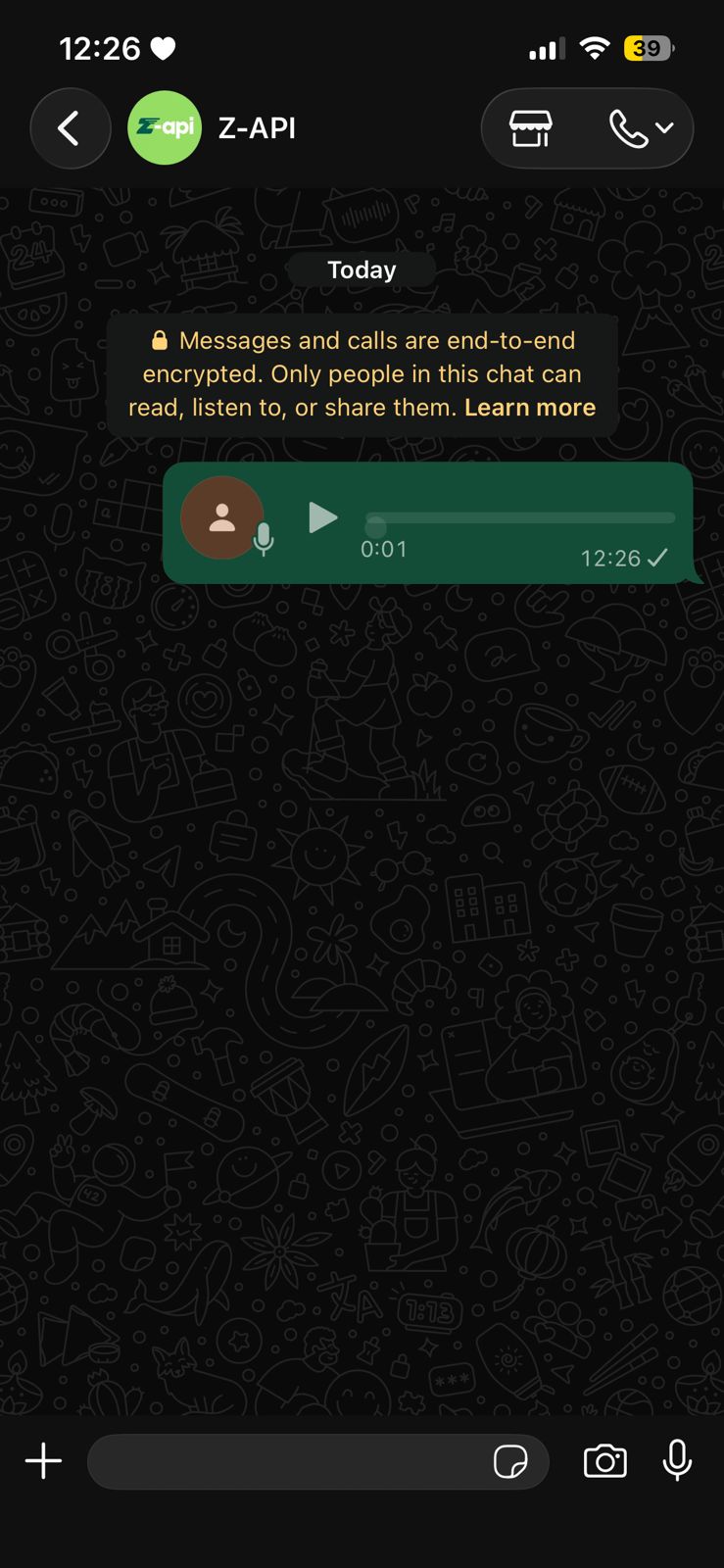
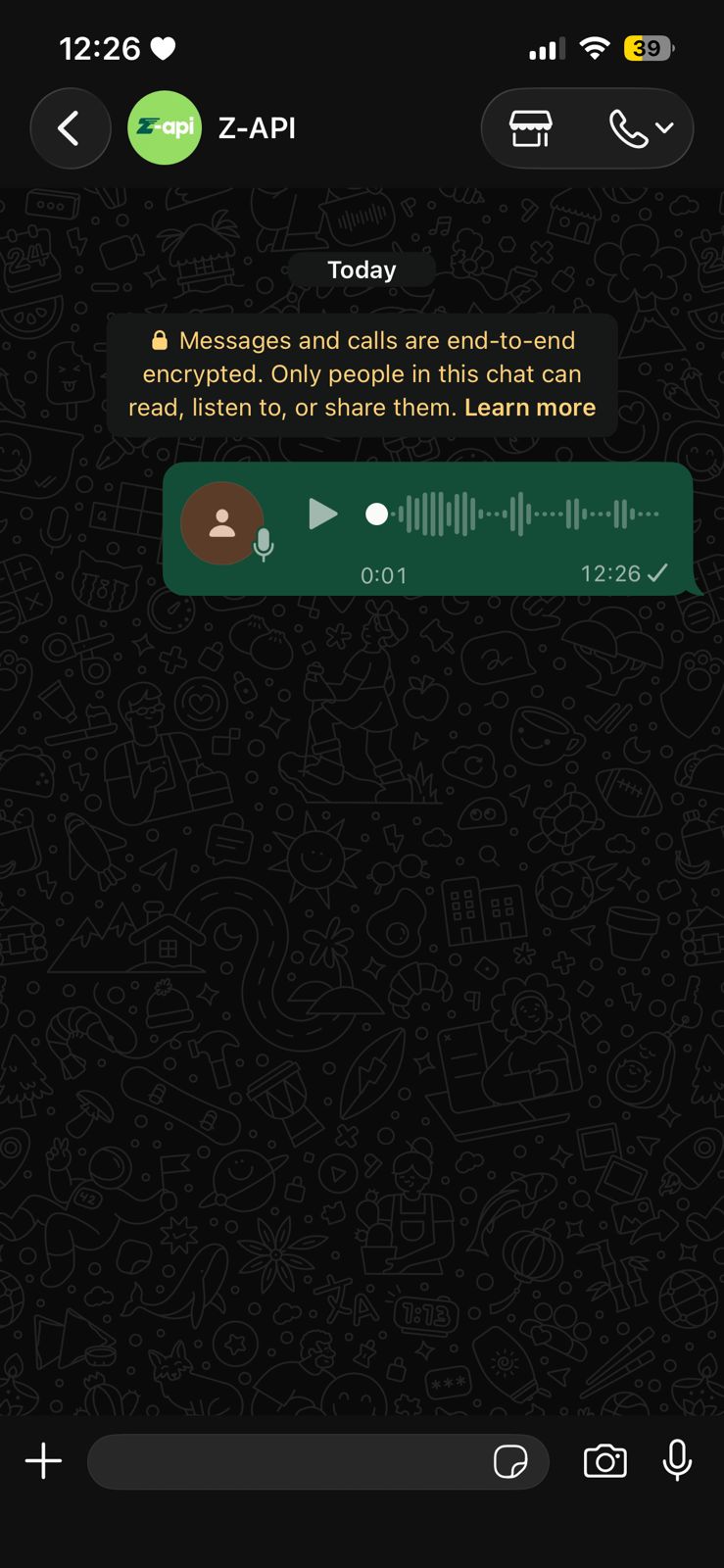
Example on WhatsApp
Attributes
Header
string
required
Your instance ID. Available in the Z-API panel under Instances.
string
required
Your Z-API instance token.
Required
string
required
Recipient’s phone number (or group ID for group messages) in DDI DDD NUMBER format. E.g.: 551199999999
string
required
Audio link or Base64
Optional
number
Delay added to the message. You can choose between a range of 1 to 15 sec, meaning how many seconds it will wait before sending the next message. (E.g.: “delayMessage”: 5). The default delay if not provided is 1 to 3 sec
number
Delay added to the message. You can choose between a range of 1 to 15 sec, meaning how many seconds it will show “Recording audio…” status. The default delay if not provided is 0
boolean
Whether it will be a view-once message or not
boolean
If enabled, the request will respond immediately with success and the file processing will be done in the background
boolean
Whether the audio will be sent with sound waves or not